When it comes to wedding videography, capturing the moment is only half the story. Capturing it from the right perspective can make all the difference to how you experience it when watching your wedding film years later.
In my previous article, Why Multi-Camera Wedding Filming Matters, I explained how filming with multiple cameras allows us to capture more emotions, reactions and important moments throughout your wedding day.
In this article, I wanted to take you behind the scenes and show you one of the camera setups I use to achieve this.
It's a compact dual-camera rig designed to capture two different perspectives of the same moment simultaneously, giving me greater coverage, more detail and much more flexibility when editing your wedding film.
The setup: Two cameras, two perspectives
At the heart of this rig is a Manfrotto ONE carbon fibre tripod, paired with a Vanguard VEO MT-12 multi-mount bar.
This combination allows me to mount two Sony FX30 cinema cameras side by side, with each camera configured to capture a different perspective.
Rather than having two cameras recording essentially the same shot, I can use one to capture a wider view of the scene and the other to concentrate on the finer details.
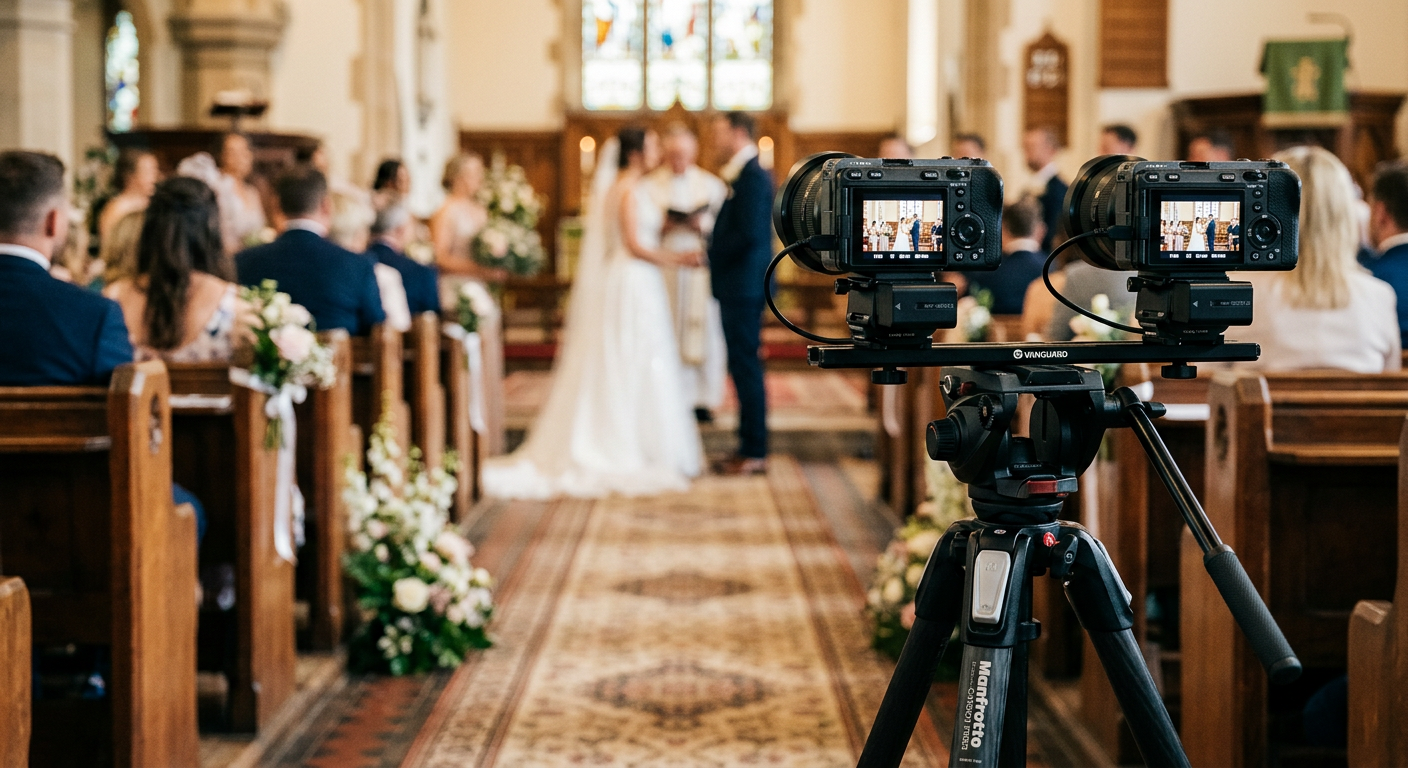
The beauty of this setup is that it gives me two complementary shots from a single tripod position. It is particularly useful during moments where I need reliable coverage but don't want to compromise on the cinematic look of the finished film.
Why I use two Sony FX30 cameras
Using matching camera bodies has some real advantages when filming weddings.
Both cameras are Sony FX30s, which means I can maintain a consistent look across both angles, with similar colour, image quality and performance.
This makes a big difference during editing. When switching between the wide shot and the closer shot, I want the footage to feel natural and seamless rather than like I'm switching between two completely different cameras.
Having matching cameras also means I can configure them in a similar way, making my workflow more consistent and predictable throughout the wedding day.
One wide angle, one closer shot
The most important part of this setup is how I configure the two cameras.
One camera is positioned to capture a wider angle, giving me the overall scene and showing the environment around the moment. This is my safety shot, but it is also an important storytelling shot in its own right.
The second camera is zoomed in, framing the upper body and capturing more detail. This allows me to see facial expressions, gestures, emotion and those subtle moments that can easily get lost in a wider shot.
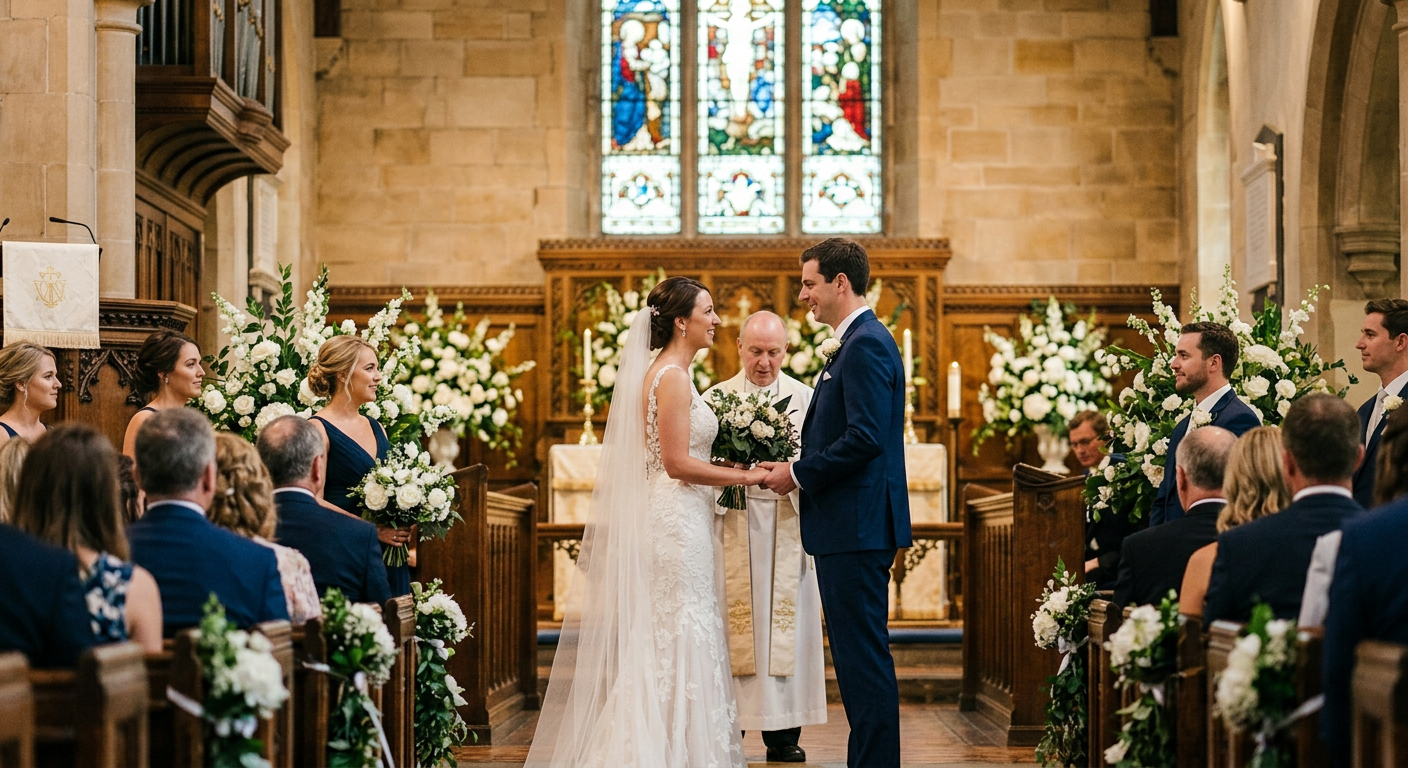
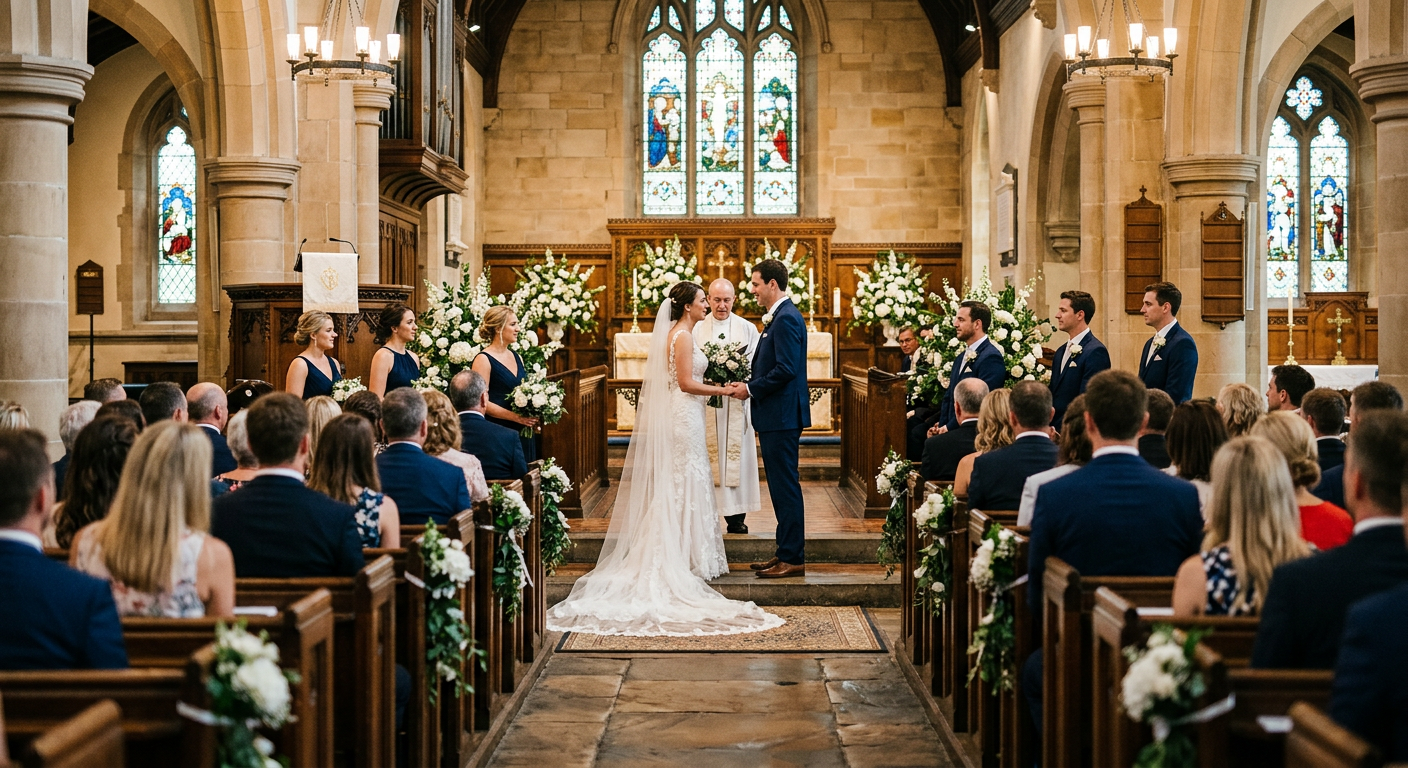
When editing, I can move naturally between these perspectives. The wider shot establishes what's happening, while the closer shot brings the viewer into the emotion of the moment.
It is this combination that helps make a wedding film feel more immersive and engaging.
Positioned at the end of the aisle for the ceremony
One of my favourite uses for this rig is during the wedding ceremony itself.
I position the setup at the end of the aisle, carefully choosing the angle so that both cameras have a clear view of the ceremony without distracting from the experience for the guests.
The wide camera gives me a view of the ceremony as it unfolds, capturing the couple, the setting and the important movements throughout the service.
The closer camera is framed to capture more detail, particularly the upper body, expressions and moments between the bride and groom.
This becomes especially valuable during moments such as:
-
The bride walking down the aisle.
-
The groom's reaction as he sees his bride for the first time.
-
The exchange of vows.
-
The exchange of rings.
-
The first kiss.
-
The little smiles, glances and emotional reactions throughout the ceremony.
Because both cameras are recording at the same time, I don't have to choose between capturing the overall moment and capturing the emotion within it.
I have both.
And when it comes to editing the ceremony, that gives me far more creative freedom to build a film that feels natural, emotional and cinematic.
The same rig works brilliantly during wedding speeches
The ceremony isn't the only time this setup proves its worth.
Wedding speeches are full of moments that are impossible to predict. There might be laughter, tears, a surprise story, a heartfelt message or a reaction from the couple that is just as memorable as the words being spoken.
For speeches, I can configure the two cameras slightly differently.
One camera is focused on the person delivering the speech, ensuring I have a clear view of the speaker throughout.
The second camera is positioned and framed to capture the bride and groom.
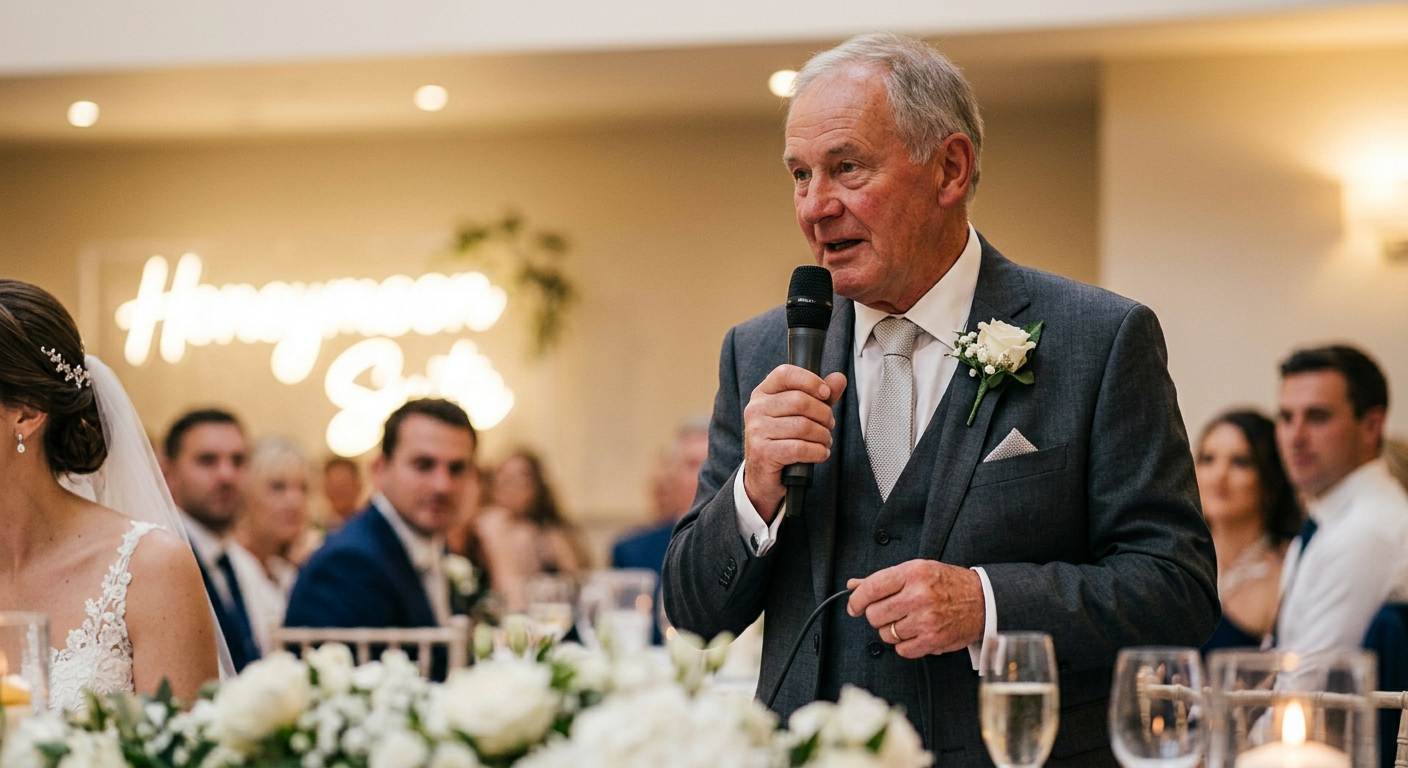
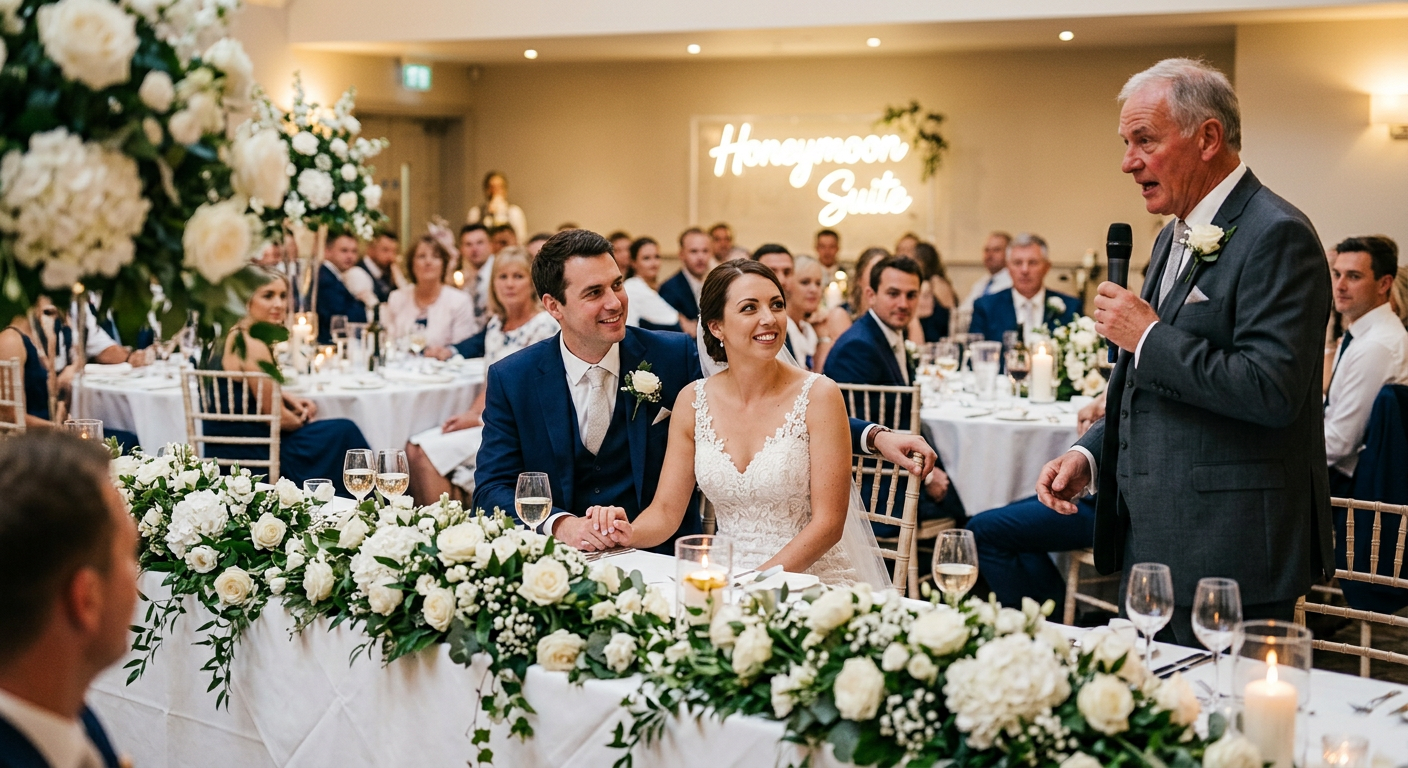
This is something I particularly love because a speech isn't just about the person standing up and talking. It's about the people listening, too.
A father delivering an emotional speech is one part of the story. The bride wiping away a tear, the groom laughing, the couple holding hands or exchanging a look is another.
With this setup, I can capture both sides of that story simultaneously.
When editing the speeches, I can cut between the speaker and the couple's reactions, adding emotion, personality and context to the film without missing the important words.
It also means I don't have to rely on a single camera angle for the entire speech, which can become visually repetitive over a longer recording.
Capturing the first dance from two angles
The first dance is another moment where this dual-camera setup really comes into its own.
For the first dance, I can use one camera to capture a wider shot of the couple dancing, showing the atmosphere, the room, the lighting and the people surrounding them.
The second camera can concentrate on a closer perspective of the bride and groom, capturing their expressions, movement and the little moments between them.
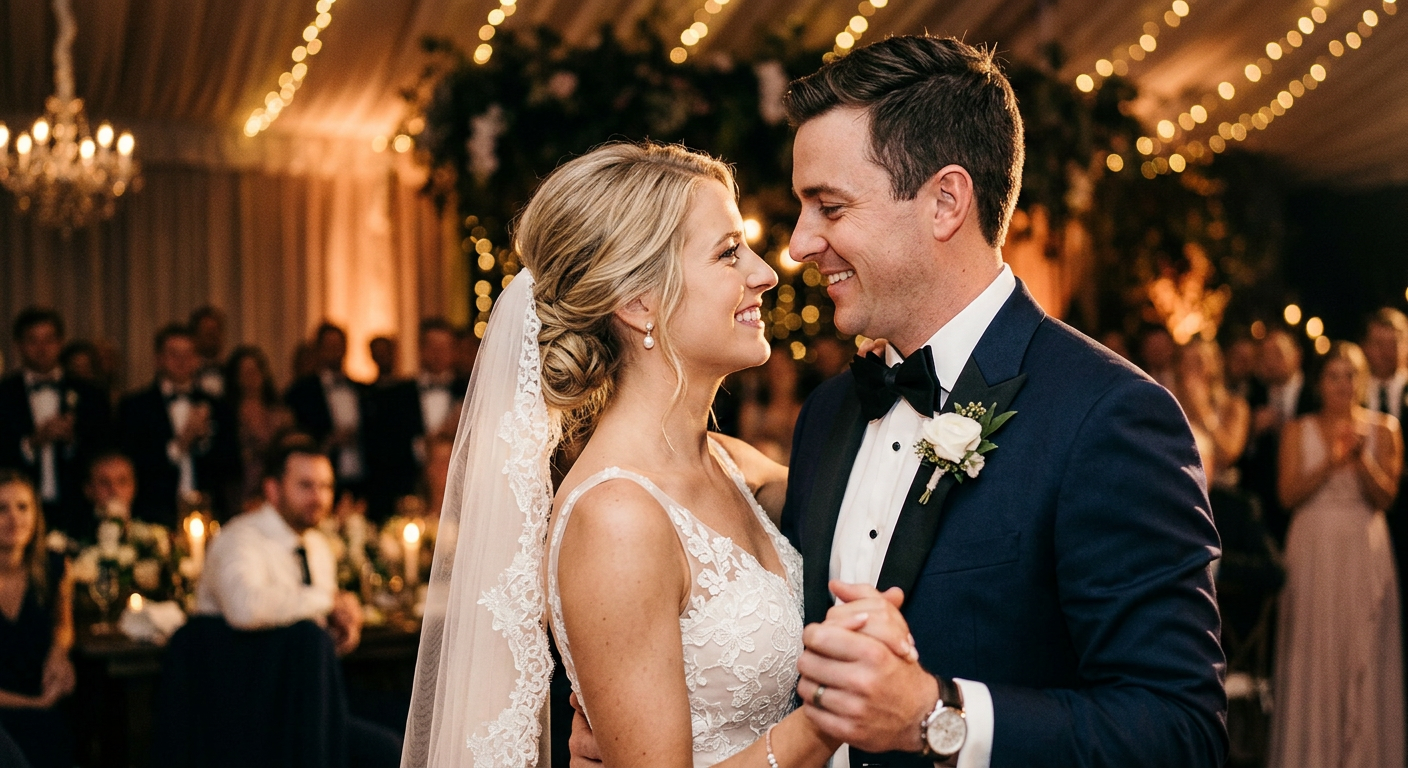
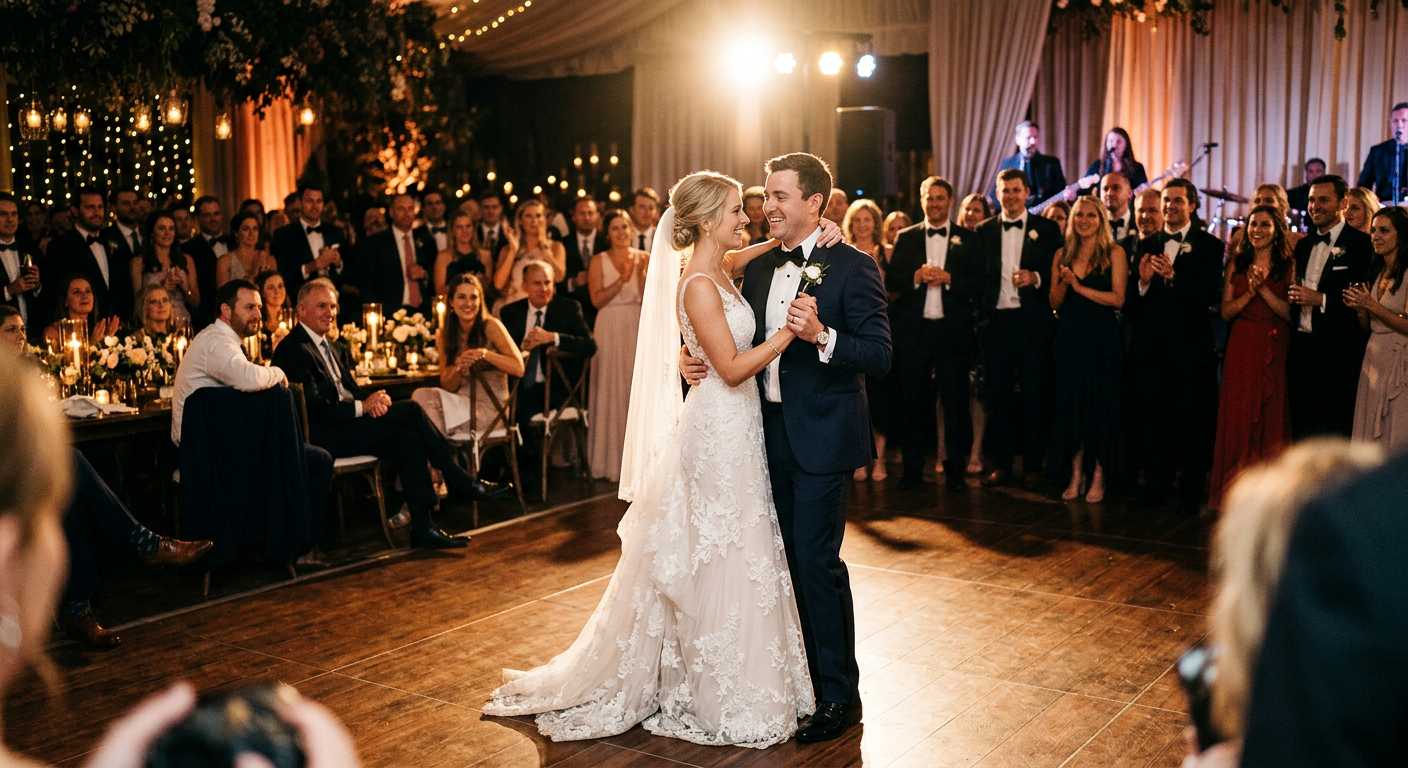
This gives me the ability to combine the atmosphere of the room with the intimacy of the couple's first dance.
A wide shot might show the couple moving across the dance floor beneath beautiful lighting, while the closer angle captures a smile, a laugh, a look into each other's eyes or a moment where they become completely absorbed in the dance.
Both shots have their place, and having them recorded simultaneously means I can blend the two together during editing to create something much more visually interesting.
Why mount both cameras on one tripod?
There are several reasons I like this particular arrangement.
A consistent camera position
Both cameras share the same position, which keeps the two angles closely related. This makes switching between the footage much more natural during editing.
Less equipment spread around the venue
Rather than setting up two completely separate tripod systems, I can use one main tripod with a dual-camera mounting bar.
This creates a more streamlined setup, which is particularly helpful in venues where space is limited or where I need to be mindful of guests, staff and the layout of the room.
More efficient filming
Once the rig is positioned, framed and recording, both angles are capturing the moment together.
I don't need to operate two separate cameras during those moments, allowing me to concentrate on other aspects of filming the day and making sure my coverage is as complete as possible.
Greater creative flexibility
Perhaps the biggest advantage is what this gives me in the edit.
Having two different perspectives of the same moment allows me to control the pacing, create visual variety and focus on the emotion as the story unfolds.
It means I can make the finished film feel more considered and cinematic, rather than simply presenting a fixed view of what happened.
A simple setup that makes a big difference
Although this rig may look relatively simple, it plays an important role in the way I film weddings.
The combination of the Manfrotto ONE carbon fibre tripod, Vanguard VEO MT-12 mounting bar and two Sony FX30 cameras allows me to capture more than one perspective without needing to constantly reposition cameras during important moments.
Whether it's the ceremony, speeches or first dance, the principle remains the same: one camera captures the wider story, while the other brings me closer to the emotion and detail.
For me, wedding videography is about more than documenting the events of the day. It's about preserving the atmosphere, the reactions, the expressions and the little moments that might otherwise be forgotten.
And having the right camera setup helps me do exactly that.
Capturing more of your wedding story with I Do Memories
At I Do Memories, I carefully consider how each important moment of your wedding day is filmed.
From the ceremony and speeches to your first dance, using multiple cameras allows me to capture different perspectives and create a wedding film that feels more complete, more immersive and more personal.
Because when you watch your wedding film in years to come, I want you to remember not just what happened, but how it felt.
I Do Memories – Capturing moments. Creating memories.
If you're planning your wedding and looking for a videographer who puts thought into every detail of capturing your day, I'd love to hear about your plans.
0 Comments